 DDungDDang Family
Water Clock
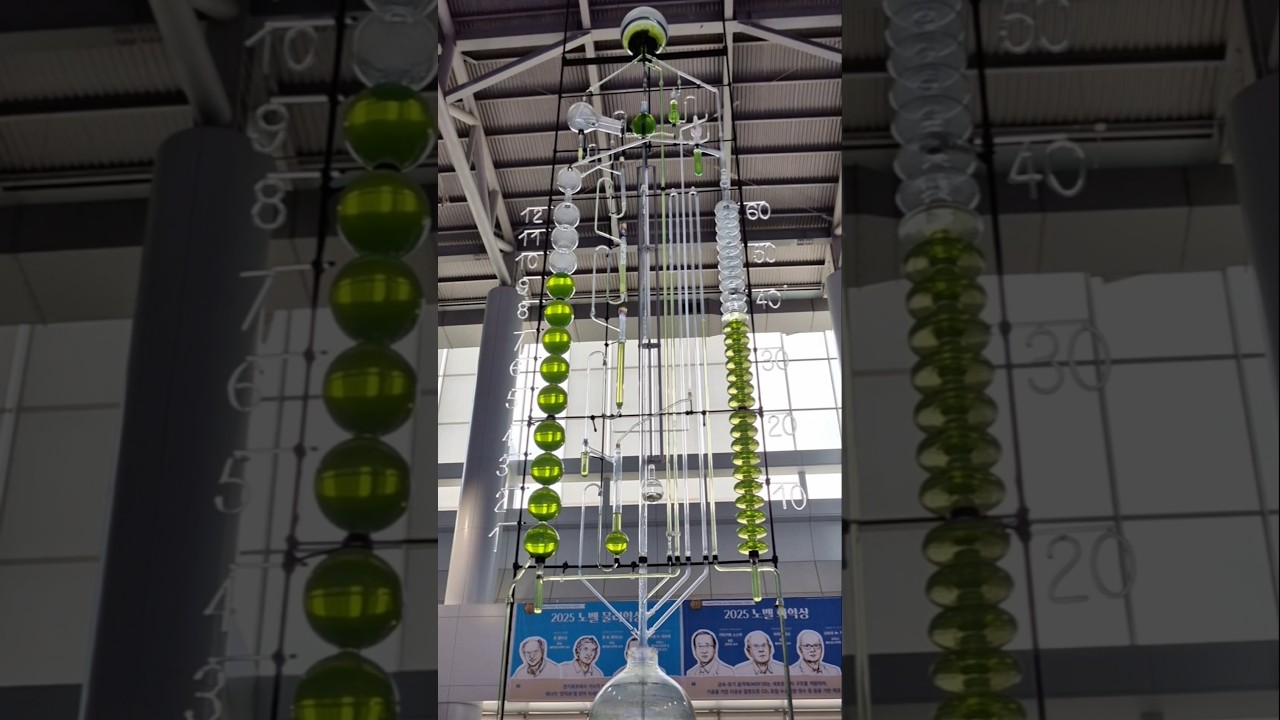 Play the video
Daegu Science Museum Water Clock: How It Works and What to Look For
Background and tips the video could not fit in — written out.
Can you tell time using water? The 12-second video “Water Clock” by the Algongdalgong Ttungttanji Family includes “water clock,” “clock,” “science museum,” and “Daegu Science Museum” in its title and tags, making it a chance to explore how water can be used to measure time. There’s no description, so we can’t confirm exactly what kind of exhibit it is or how it works. But once you know the basic principles of water clocks, even a short video can open the door to a science story.
How does a water clock work?
A water clock is a device that links the passage of time to the flow or accumulation of water. Common designs either measure how the water level drops as it flows out of a container, or how the water level rises as it collects in another container. By first determining how much water moves in a set amount of time and then marking a scale, you can show the passage of time.
The key isn’t simply that the water moves, but how consistently that movement can be maintained.
How is it different from a sundial?
A sundial tells time by the position of a shadow cast by sunlight. A water clock, on the other hand, uses the flow of water, so it has the advantage of working at night when there’s no sunlight. However, it needs to be refilled and its flow needs to be managed. The Jagyeongnu, a well-known device in Korean history, used the flow of water to automatically announce set times. You would need to check separately whether the water clock in the video has the same structure as the Jagyeongnu.
Why can the water level dropping cause errors?
If you simply make a hole in the bottom of a water container, the water won’t always flow out at the same speed. That’s because the pressure acting on the hole differs when the water is deep versus shallow. So an accurate water clock needs a design that keeps the water level constant or accounts for changes in flow when setting the scale. A water clock is a tool that gets us thinking about water pressure and flow rate as well as time.
What to look for at the science museum
If your family is looking for the water clock at Daegu Science Museum, start by checking the name of the exhibit, then follow the path the water takes. Look closely at how the visible movement of the water is connected to the time display.
- Where does the water come from, and which container does it collect in?
- What is used as the basis for reading the time: a scale, the water level, or a floating object?
- Can you see a device that keeps the water level constant?
Exhibits, visitor facilities, and admission fees may change, so check the official information before your visit.
How to explore the principles at home
You can explore the relationship between the amount of water and time by collecting water in a transparent container and marking the water level at regular intervals. Compare the spacing between the marks to see whether it stays the same as equal intervals of time pass. If the container’s width changes, the water level will rise by a different amount even when the same volume of water is added. Have an adult handle any work involving making holes, prepare a tray to catch spills, and keep the experiment away from electronic devices and outlets. Use the setup as a way to understand the principles, not as a precision clock.
What to look for in the video
In the 12-second video, look at the direction the water moves, whether there are any scales or indicators, and the overall structure, one by one. Pause the video to check details that are hard to make out, but avoid guessing about functions you can’t see. Asking yourself, “What is moving, and what is being used as the measure of time?” can make observing the water clock more interesting.
At a glance
| Published | 2026.06.27 |
|---|---|
| Length | 0:12 |
| Category | Shorts · DDungDDang Family |
Watch these next



Play the video
You can watch it right here.